

If you have to convince someone that they should care about their problem, you’re probably speaking to the wrong person.
That sounds harsh.
But think about what happens when your marketing is built around convincing people that their problem matters.
You attract people who need convincing.

Mom of 3. A Business Innovation Strategist that will journey with you to get your leads to sell themselves.
[01] Messaging
[02] Client Acquisition
[03] Innovation
[04] Thought Leader
[05] Sales Systems
They love your content.
They comment on your posts.
They download your free resources.
They attend your webinars.
They tell you how helpful everything is.
And then they never buy.
So you create more content.
You nurture them longer.
You add more proof.
You send another email.
And another.
And another.
Meanwhile, the people who are already looking for what you sell are scrolling right past you.
Why?
Because your marketing isn’t speaking to them.
It’s speaking to people who might care someday.
The solution isn’t necessarily generating more leads.
It’s learning how to identify and attract active buyers—people who already know what they want, have made solving the problem a priority, and are already doing something about it.
That’s the foundation of what I call the Active Buyer System.
An active buyer is someone who is already in motion toward solving a specific problem.
They aren’t wondering:
“Do I even need this?”
They’re asking:
“Who can help me solve this?”
That’s a completely different buying state.
And it creates a completely different marketing strategy.
But that’s not necessarily how buying decisions work.
Someone can know you for two years without ever becoming convinced that they should buy.
Consider two people who both want to lose weight.
The first person is sitting on the couch thinking:
“I really should lose a few pounds.”

They’re subscribed to ten different weight-loss channels.
They watch videos about fasting.
They save workout routines.
They tell their friends they’re going to get serious about their health.
But when dinner arrives, they’re still ordering fast food and sitting on the couch.
They have the problem.
They might even have the money.
But they aren’t moving.
Now consider the second person.
They’re at the gym at 6 AM.
They’ve hired a trainer.
They’ve booked a beach vacation in 12 weeks.
They have a specific outfit they want to wear.

They’ve already started taking action.
Both people might technically fit the same target market.
But only one has buying intent.
That’s the distinction most marketing strategies miss.
We’ve been taught that the “right client” is someone who is qualified.
They:
But qualification doesn’t tell you when someone is going to buy.
Someone can have the money, the problem, and the need for your solution and still happily spend another six months trying to solve it themselves.
That’s because:
Qualification tells you someone’s ability to buy.
Intent tells you their readiness to buy.
And readiness is what matters when you’re trying to build a business where your sales conversations actually count.
So how do you recognize an active buyer?
Look for three things.
I call it DNA: Desire, Need, and Action.
An active buyer isn’t just vaguely interested in improvement.
They want something specific.
The person going to the gym isn’t simply thinking:
“I want to be healthier.”
They have a concrete outcome:
“I want to fit into that bikini for my beach vacation in 12 weeks.”
That’s desire.
The more specific the desired outcome, the easier it becomes to recognize buying intent.
Someone can want something without prioritizing it.
That’s why desire alone isn’t enough.
The active buyer has moved the problem toward the top of their list.
The vacation is coming.
The applications are due.
The promotion needs to happen.
The business needs to solve the cash-flow problem.
Whatever it is, something has caused the problem to become urgent enough to act on.
That’s need.
This is the strongest signal.
What have they already done?
Are they:
Searching for solutions?
Comparing providers?
Buying courses?
Hiring consultants?
Booking calls?
Reading reviews?
Asking questions?
Trying solutions that haven’t worked?
Investing money to solve the problem?
Action tells you that the person isn’t just talking about change.
They’re already moving toward it.
And that’s the difference between interest and intent:
Interest talks. Intent moves.
Here’s where this gets uncomfortable.
Your marketing may be attracting low-intent buyers because that’s exactly what your marketing was designed to do.
Most marketing advice says:
First, introduce the problem.
Then explain why it matters.
Then make the problem feel more painful.
Then teach them about possible solutions.
Then nurture them.
Then build trust.
Then send another email.
Eventually, they’ll be ready.
But look at what that strategy is actually doing.
It’s taking someone who doesn’t care yet and trying to make them care.
So naturally, you attract people who need convincing.
That’s why you can publish something like:
“5 Reasons Your Gut Health Matters”
and get thousands of views.
Or:
“Why Your Marketing Isn’t Working”
and get tons of engagement.
People consume the content because it’s interesting.
They might even agree with everything you said.
But agreement isn’t buying intent.
This is one of the most important distinctions you can make in your marketing:
Interest is not intent.
Someone can be interested in a problem without wanting to solve it right now.
They can:
Read your content
Watch your videos
Follow your account
Download your lead magnet
Attend your webinar
Comment on your posts
…and still have zero intention of buying.
Meanwhile, an active buyer might never engage with the majority of your content.
They don’t need another educational post explaining why their problem matters.
They already know.
They’re looking for:
How do I fix this?
That’s why the content that attracts active buyers can sometimes get fewer views.
And that’s okay.
This is one of the hardest mindset shifts for businesses that have been conditioned to measure marketing by reach.
If you create content designed for everyone who might care about your problem, you’re optimizing for attention.
And attention is not the same as demand.
Views measure attention.
They don’t necessarily measure buying intent.
I’d rather have 2,000 views from people who are actively looking for your solution than 100,000 views from people who will never take action.
Because the goal isn’t to become interesting to everyone.
The goal is to become obviously relevant to the right person at the right moment.
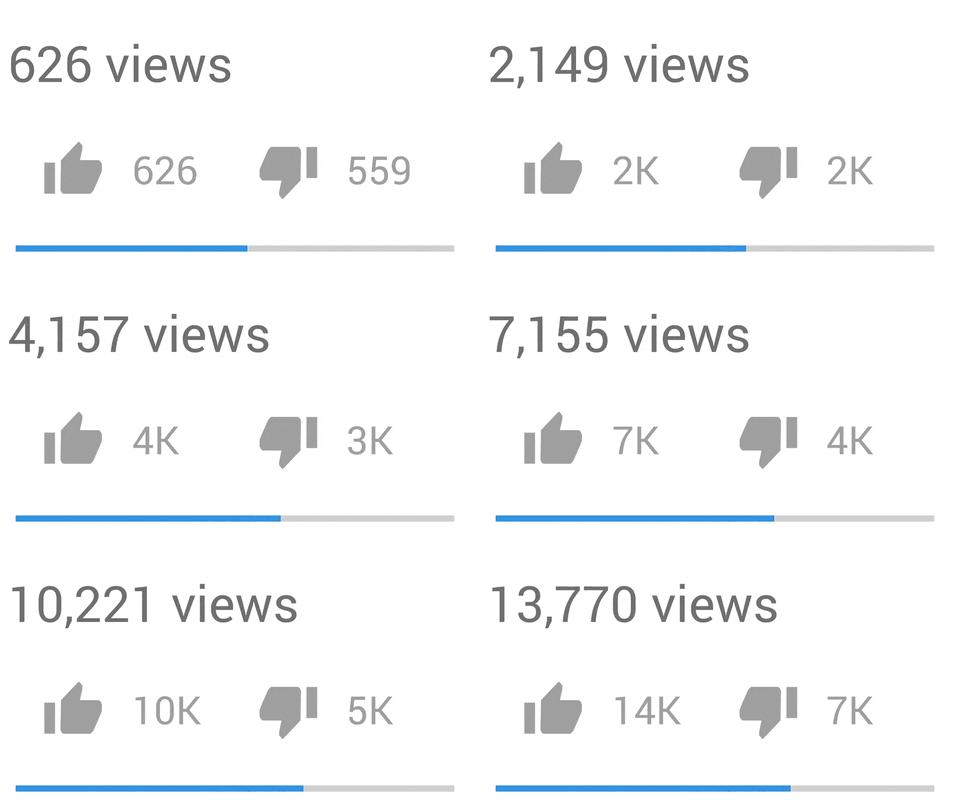
That means your content might get fewer views.
But the right people are much more likely to stop and think:
“Oh my gosh. That’s exactly what I’m trying to solve.”
The good news is that active buyers are already telling you what they want.
You don’t need to guess.
You need to listen.
Think about what happens when you’re trying to solve a problem yourself.
You don’t necessarily search for:
“Why is this problem important?”
You search for:
“How do I fix this?”
That’s the language of demand.
And your market is full of people using that language every day.
You can find it in:
Facebook groups
Quora
Your DMs
Sales calls
Customer conversations
Reviews
Community discussions
Search queries
Comments
Questions people repeatedly ask
Look for phrases like:
“I’m looking for…”
“How do I…”
“I’ve tried…”
“What’s the best way to…”
“I need help with…”
“Why isn’t this working?”
These phrases reveal something incredibly valuable.
They’re showing you what an active buyer is already trying to accomplish.
Most businesses start content creation by asking:
“What should I post about?”
Then they talk about what they know.
They explain the history of the problem.
They discuss common mistakes.
They teach why the problem matters.
They share tips.
All of that can be useful.
But it’s not necessarily what someone in a buying state is looking for.
The active buyer is usually looking for a specific outcome.
For example:
“I want to open a second location in the next 90 days without doubling my workload.”
Or:
“I want my son to stop failing math before the semester ends.”
Or:
“I want to get hired by a top technology company despite not having decades of experience.”
Those are demand angles.
They tell you what the buyer is already trying to get done.
And once you understand the desired outcome, your marketing becomes much more specific.
Imagine two food truck owners.
The first cooks whatever sounds good and parks wherever there’s space.
The second reads customer comments.
They see:
“When are you bringing back the birria tacos?”
“We’ll drive across town for these.”
“Please come back to this neighborhood.”

The second owner isn’t guessing what people want.
They’re listening to demand that already exists.
Your market works the same way.
The information is already there.
Your job is to find it.
And once you find it, you can use your buyer’s own language to shape your:
Content
Headlines
Offers
Sales messaging
Landing pages
Emails
Calls to action
You don’t have to manufacture desire.
You can meet existing demand.
Once you know who is in motion and what they want, there’s one more question:
Why should they choose you?
That’s the job of your message.
Your message is the bridge between:
And for an active buyer, that message needs to do more than describe your service.
It needs to demonstrate that you understand:
That’s what makes your solution feel relevant.
Imagine you’re a dog trainer.

Your ideal active buyer has already:
Tried treats
Watched YouTube videos
Taken a six-week training class
But their dog still pulls on the leash.
They’re frustrated.
They’re searching:
“How to get my dog to stop pulling on the leash even after training.”
Now compare two headlines.
Useful?
Sure.
But it isn’t necessarily speaking to the active buyer.
Now:
That’s different.
It mirrors the buyer’s actual situation.
And then the message can explain:
The problem isn’t necessarily that the owner failed.
The dog learned in a quiet training environment.
But the real-world environment is full of distractions—cars, other dogs, people, noise, movement.
So the solution isn’t simply more commands.
It’s teaching focus and impulse control in the environment where the behavior actually needs to happen.
Now you’ve done something important.
You’ve shown the buyer:
“You understand why what I’ve tried hasn’t worked.”
And:
“You have a different mechanism for solving it.”
That’s what makes the right buyer lean in.
When you get the message right, something interesting happens.
The buyer feels understood before you’ve ever spoken to them.
They think:
“That’s me.”
Then:
“That’s exactly what I’ve tried.”
Then:
“Oh. That’s why it didn’t work.”
And finally:
“This person knows how to fix it.”
That creates relief.
Then trust.
Then relevance.
And eventually, a decision becomes much easier.
You’re no longer asking them to believe that you can help.
You’re showing them that you understand the exact problem they’ve been trying to solve.
This is one of the strangest things that can happen when you start marketing to active buyers.
Your engagement might decrease.
Your views might decrease.
Your reach might decrease.
And your sales can increase.
That’s because you’re no longer optimizing for everyone who finds the topic interesting.
You’re optimizing for the people who are in motion.
For example, one financial advisor had built a large audience around content about hidden cash-flow mistakes.
The content generated substantial engagement.
But it wasn’t generating enough consultation requests.
The message was changed to speak directly to business owners who had reached a specific revenue level but couldn’t understand why their cash position didn’t reflect their growth.
The engagement dropped.
But consultation requests increased fivefold.
That’s the trade-off many businesses are afraid to make.
They’d rather have more people watching than fewer people buying.
But if your goal is revenue, attention isn’t the finish line.
Buying intent is.
Platforms change.
Algorithms change.
Advertising options change.
What you can target changes.
But there’s one targeting mechanism you control completely:
Your message.
You can put a message in front of someone anywhere, and if it accurately reflects what they’re already trying to solve, they’ll recognize themselves in it.
That’s powerful.
Because you don’t need to rely entirely on demographic targeting.
You can target psychologically through relevance.
The right person sees the message and thinks:
“Where have you been?”
That’s what great positioning does.
So let’s bring this all together.
The Active Buyer System comes down to three questions.
Who is already in motion?
They know what they want.
They’ve made it a priority.
And they’re already doing something about it.
That’s your highest-intent buyer.
What specific outcome are they already trying to achieve?
Don’t guess.
Listen to the market.
Find the words they’re already using.
Find what they’re searching for.
Find what they’ve already spent money trying to solve.
That’s where demand lives.
How do you connect what they’re trying to accomplish with the solution you provide?
Show them:
Where they’re going.
What they’ve tried.
Why it didn’t work.
What’s actually missing.
Why your approach fills the gap.
That’s your message.
If your sales team is spending half the week talking to people who aren’t going to buy, you don’t necessarily have a lead-generation problem.
You may have a buyer-intent problem.
If your content gets tons of engagement but few sales, you may not have a content problem.
You may have a demand and messaging problem.
If people constantly ask:
“Why do I need this?”
you may be marketing to people who haven’t decided the problem is important yet.
And that’s expensive.
Because now you have to do the work of creating the urgency they don’t currently have.
Instead, imagine your sales conversations starting with:
“How can we work together?”
Imagine fewer calls, but more of them actually matter.
Imagine clients who already understand the value of solving the problem.
Imagine not having to spend half your sales call explaining why they should care.
That’s what happens when you stop building your marketing for the person on the couch…
…and start building it for the person already at the gym.
The Active Buyer System is the front door to a larger system.
Finding people who are already in motion is one thing.
Turning those people into clients who say yes without being chased—and then creating results that make them stay, refer, and advocate for you—is the bigger goal.
That’s where the Easy Yes Method comes in.
The first step is building your Innovation Asset—the distinct methodology and intellectual property that makes your expertise difficult to compare with everyone else in the market.
Then comes the Bingeable Decision System, where your expertise becomes a self-selling marketing and sales experience that mirrors how people naturally make decisions.
And finally, there’s the Happy Client Machine—the system that helps clients get exceptional results without making your business completely dependent on you.
But it all starts at the front door.
Finding the right buyer.
Because you can have an incredible offer.
You can have an incredible sales process.
You can have an incredible client experience.
But if you’re spending your time convincing people who aren’t ready to buy, everything downstream becomes harder.
Your job isn’t to make everyone care about the problem you solve.
Your job is to find the people who already care.
The people who have tried.
The people who have failed.
The people who have prioritized the problem.
The people who are actively looking.
The people who are ready to invest money instead of another six months trying to figure it out themselves.
Those people are already out there.
They’re searching.
They’re asking questions.
They’re comparing solutions.
They’re looking for someone who can finally help.
So the question isn’t:
“How do I make more people interested in what I sell?”
It’s:
“How do I recognize the people who already want it—and make sure they recognize me as the answer?”
That’s the shift from marketing for attention to marketing for intent.
From qualified leads to active buyers.
And ultimately, from chasing buyers…
to having the right buyers come to you already knowing:
“This is exactly what I’ve been looking for.”
Learn more about how to transform your podcast from a top-of-funnel attention-grabber into a middle-of-funnel nurturer that drives real results.
Check out our Bingeable, On- Demand System that shares exactly how The Netflix Effect gets your leads to sell themselves.