
Most businesses don’t actually have a client acquisition problem.
They have a buyer problem.
From the outside, everything looks fine:
But behind the scenes?
Client acquisition still feels unpredictable.
One month is strong.
The next month feels shaky.
So businesses do what they’ve been taught to do:
And yet…
Nothing feels consistent.
From the transcript, the issue is not a lack of leads.
It’s this:
“They’ve built ways to generate activity, but never actually built a system that creates buyers.”
And that changes everything.

Mom of 3. A Business Innovation Strategist that will journey with you to get your leads to sell themselves.
[01] Messaging
[02] Client Acquisition
[03] Innovation
[04] Thought Leader
[05] Sales Systems
Most businesses rely on selling processes.
A self-selling system is different.
“How do we convince people to buy?”
So it creates:
The goal is to slowly push someone toward readiness.
“How do we attract people who are already ready?”
The idea is simple:
Instead of dragging buyers toward a decision…
You create a system where buyers move themselves.
“Your marketing is meant to turn an unready buyer into a ready one.”
That’s how most funnels are built.

You become the fairy godmother.
You nurture.
You warm them up.
You keep waving the wand until eventually…
Maybe they buy.
Because manufactured buyers don’t stay.
And the deeper problem?
A system designed to drag people into buying…
Will always attract people who need dragging.
When these work together:
Most businesses create messaging that makes people think.
“Thinking is the enemy of buying.”
That line matters.
Because the moment people have to:
You lose momentum.
A doctor’s office says:
“Helping patients live their best lives.”
Sounds nice.
But it’s vague.
Instead:
“Same-day appointments for back pain.”
Now the buyer instantly knows:
No interpretation needed.
Generic Version
“Fast, reliable plumbing services.”
This creates browsing.
High Intent Version
“Emergency plumber available 24/7. On-site in 60 minutes.”
Now urgency matches intent.
That’s what makes someone stop.
High intent buyers are not casually scrolling.
“High intent buyers are searching.”
That means:
Your message should feel like an answer.
Not branding fluff.
They focus on:
Before addressing the immediate desire.
Instead of:
“I help entrepreneurs unlock their fullest potential.”
Say:
“I help founders reduce 90-day sales cycles into 7-day buying decisions.”
Now it feels tangible.
Specific.
Immediate.
Even if the right people find you…
Most businesses still lose them.
Why?
Because buyers compare.
Someone finds you…
Then opens three more tabs.
Now they’re:
And once comparison begins:
Momentum dies.
That phrase usually appears when:
You’re positioned as a great option.
Not the only option.

Imagine someone with a complex medical condition.
They discover a doctor with:
Now the question changes.
It’s no longer:
“Which doctor should I choose?”
It becomes:
“How do I get access to THIS method?”
That is singular authority.

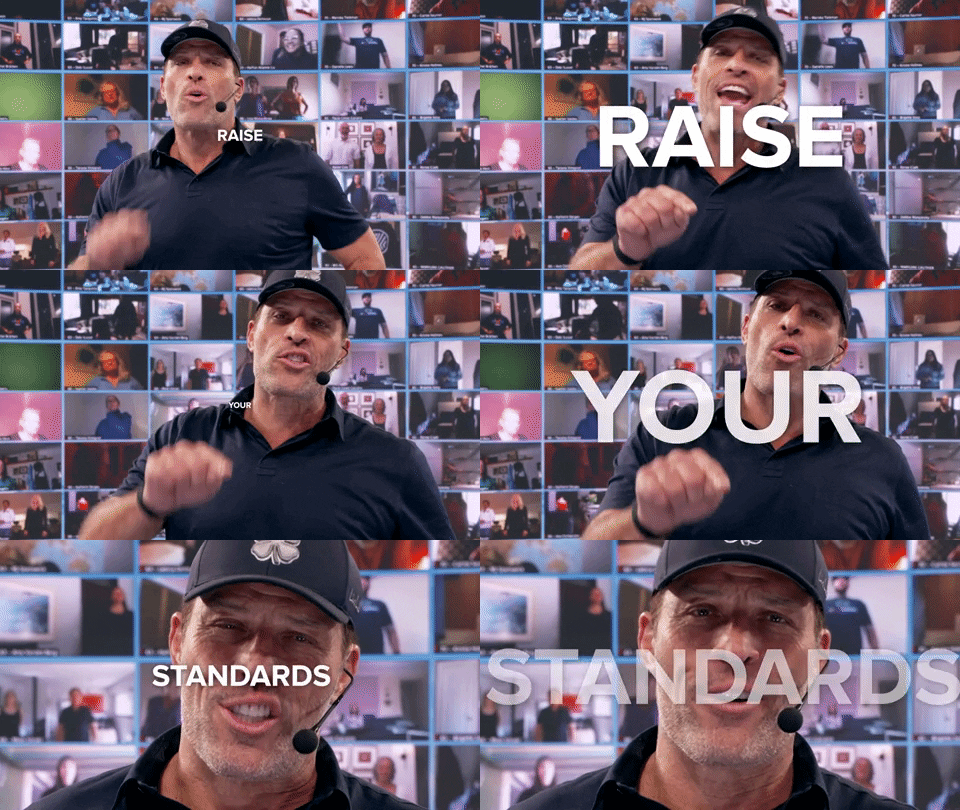
There are thousands of motivational speakers.
But nobody asks:
“Who’s a good Tony Robbins alternative?”
Because Tony Robbins became the category.
Not a participant inside one.
You do not want to be:
You want to become:
Irreplaceable.
The client:
And says:
“I need to think about it.”
This means:
Finding the gap nobody else has solved clearly.
Then building your method around it.
Instead of:
“I help with leadership coaching.”
You create:
“A framework for helping executives build authority without burnout.”
Now buyers attach to the method.
Not just the service.
This is where most businesses destroy conversions.
Not because buyers weren’t interested.
Because the system became exhausting.
You walk in for one thing…
Then get trapped in:
Eventually you lose momentum.
It becomes a maze.
“High intent buyers don’t do mazes.”
That line explains everything.
Because buyers already ready to move…
Do not want complexity.
A great museum:
That’s what a self-selling system should feel like.
High intent buyers already know:
So they are NOT looking for more information.
They’re looking for:

They want confirmation that:
One of the strongest ideas in the transcript is this:
You should not interrupt the buyer’s thought process.
You should mirror it.
Instead of:
Trying to educate endlessly…
You structure the journey around what they are already thinking.
So every touchpoint feels like:
“Yes. Exactly.”
When all three parts work together:
Brings the right people in.
Makes alternatives irrelevant.
Makes the path feel effortless.
And most importantly:
You stop attracting people who need convincing.
The idea:
Every step should naturally pull buyers into the next one.
No force.
No pressure.
No dragging.
Just momentum.
The biggest shift in client acquisition is this:
Stop trying to create buyers.
Start building systems for buyers who already exist.
Because the businesses that scale fastest are not the ones doing the most convincing.
They are the ones who make buying feel:
That is self-selling client acquisition.
And once your system does the selling for you…
Client acquisition stops feeling like survival.
And starts feeling inevitable.
Learn more about how to transform your podcast from a top-of-funnel attention-grabber into a middle-of-funnel nurturer that drives real results.
Check out our Bingeable, On- Demand System that shares exactly how The Netflix Effect gets your leads to sell themselves.
