Most content doesn’t fail because it’s bad. It fails because it was built to compete.
Most content doesn’t fail because it’s bad.
It fails because it was built to compete.
Compete for attention.
Compete for credibility.
Compete to sound just different enough inside the same tired conversation.
And when content competes, it doesn’t trigger a decision.
It triggers a search.

Your ideal client reads your post, nods along, and thinks, “This makes sense.”
Then they Google five other people who sound exactly like you.
Same promises. Same language. Same outcomes.
They pick whoever’s cheaper, faster, or feels nicer that day.
That’s not a lead problem.
That’s a content problem.
This is the core idea behind #1: Category-Defining Content—content that doesn’t educate people to shop, but reshapes how they think so shopping stops making sense.
Let’s break it down.
Most founders are doing what they were told:

It works for engagement.
It doesn’t work for conversion.
Why? Because this entire playbook was designed for people with nothing unique to show.
When you’re teaching borrowed frameworks or industry best practices, revealing how you work makes you look replaceable. So the strategy becomes: hide the method, tease the outcome, protect the “secret sauce.”
That makes sense—if you don’t have innovation.
But if you do have an innovation asset?
That same strategy erases it from your content.
You end up sounding like everyone else… even when you’re not.
Category leaders don’t try to win existing conversations.
They end them.
They build content on one thing:
their innovation asset—the new way of thinking they’ve created.
They don’t hide it.
They reveal it.
And that’s what changes everything.
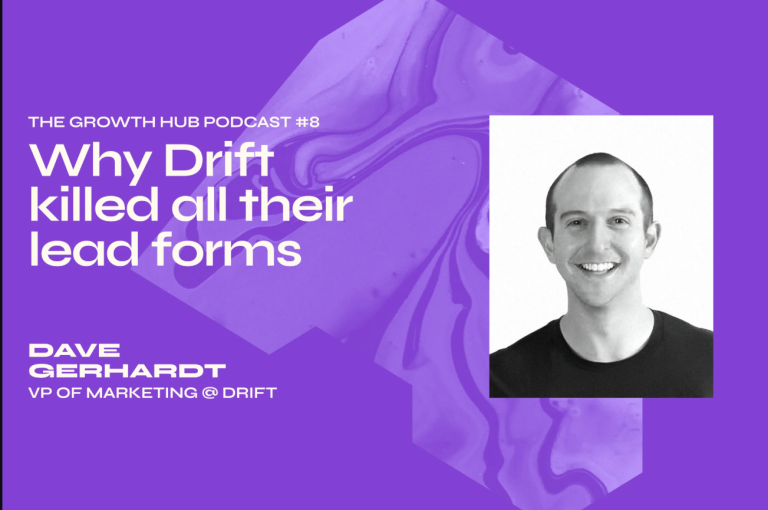
In 2016, everyone in marketing was obsessed with lead generation.
Better forms.
Better copy.
Better conversion rates.
Same conversation. Different flavors.

David Cancel, CEO of Drift, didn’t try to make forms better.
He made forms the villain.
One morning, he told his team to remove all forms.
Then he built content around one idea:
Forms are customer abuse.
Not “forms could be improved.”
Not “here’s a better way to capture leads.”
Forms were the problem.
Drift’s content attacked the entire lead-gen industry:
They didn’t join the conversation.
They replaced it.
Forms became unacceptable.
Conversational marketing became the answer.
When people thought, “Who does conversational marketing?”
There was only one name.
Drift.
Drift wasn’t an exception.
Salesforce did the same thing.

In the early 2000s, CRM companies all said the same thing:
Better features
Easier setup
Stronger support
They were fighting over who had the best on-premise software.

Marc Benioff wasn’t interested.
He said software itself was the problem.
Salesforce launched the “No Software” campaign:
Software CDs thrown in toilets
Salespeople in cages
Software portrayed as obsolete
They didn’t say, “Our CRM is better.”
They said, “The entire model is dead.”
Cloud computing became the future.
Salesforce became the authority.
That content helped spark a $250B SaaS market.
Not by competing.
By redefining the game.
Netflix shows don’t start with a 10-minute introduction. They dive straight into the action.
Your marketing should do the same.
Example: Instead of a 30-minute webinar explaining who you are, start with a compelling story or a bold statement that makes your audience think, I need to know more!
Just like Netflix auto-plays the next episode, your content should naturally lead to the next step without friction.
Example: If you have a video series, ensure each video ends with a teaser that makes the viewer excited for the next one. If you have a lead magnet, guide them seamlessly into the next phase without overwhelming them.
When people feel overwhelmed with choices, they hesitate. Your job is to simplify the decision-making process.
Example: Instead of offering multiple pricing options or complex packages, present a clear and simple choice:
This is the best solution for you—here’s why.
Binge-worthy shows create trust with their audience by delivering consistently great content.
Your brand should do the same.
Example: Show up consistently with value-driven content, whether it’s emails, social media posts, or a bingeable video series.
Keep the messaging aligned so your audience knows exactly what to expect.
If your sales process can mimic these elements, you eliminate hesitation and resistance.
Instead of pushing leads through a long sales funnel, you create an experience where they want to keep going.
Let’s say you’re a business coach trying to attract high-ticket clients.
Instead of:
You apply the Netflix Effect:
The Netflix Effect isn’t just about making your content bingeable—it’s about creating a decision system that makes buying the obvious and natural next step.
When you remove friction, eliminate hesitation, and lead your audience through an effortless experience, sales happen organically.
It’s time to stop selling and start creating experiences that make people say, “I’m all in.”
So, how can you apply the Netflix Effect in your business today? Let’s make binge-worthy sales a reality.
Learn more about how to transform your podcast from a top-of-funnel attention-grabber into a middle-of-funnel nurturer that drives real results.
Check out our Bingeable, On- Demand System that shares exactly how The Netflix Effect gets your leads to sell themselves.
